
News
Will haze affect me if I have a dust mite allergy?
18
Jun
Jun
Update (October 2026): This post was written in 2013. For what we now know about haze and eczema, and the routine I recommend on haze days, read Can Haze Trigger a Flare-Up?

That third item is the important one, since forest fires in the region and the prevailing Southwest Monsoon winds blow the smoke from the fires in our direction. What is haze from open burning made out of?
- stationary sources such as power stations, oil refineries and industries;
- mobile sources such as motor vehicles; and
- others such as open burning of waste materials and transboundary air pollution.
sulphur dioxide, nitrogen dioxide, ozone, carbon monoxide and particulate matter called PM10 (particulate matter of 10 microns or smaller in size)Ok, so what is household dust made of?
All very biological, then. And since haze is not biological, I should be fine, right? Wrong. Eczema sufferers already have highly sensitive skin, and the haze can aggravate your condition:
- pet dander and hair
- mold (mostly in the bathroom)
- human skin flakes
- dust mites
- droppings
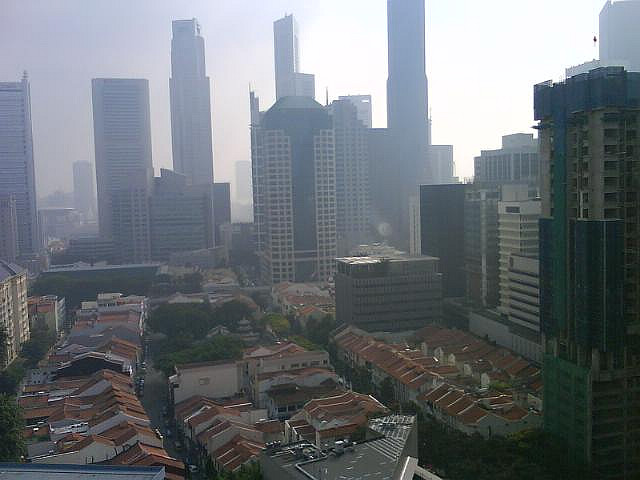
The haze should have little effect on healthy skin, said Dr Steven Thng, consultant dermatologist at the National Skin Centre. But those with eczema may find it becoming itchy and inflamed, he said. Using moisturiser three to four times a day can help protect the skin.If you want to protect your skin further, you may also want to use a shielding lotion, such as Gloves in a Bottle (I use it and love it). So the conclusion is this. If you have identified dust mites as the main cause of your eczema, dermatitis, or psoriasis, then the haze will make little or no difference since you’re not further exposed to your allergens. But since haze can dry the skin, you need to protect it with moisturisers or shielding lotion. Stay healthy, everyone! Image by micamonkey on Flickr: http://bit.ly/12FkkdC
