
Sleeves
Eczema on Your Arms: Causes, Daily Care and How to Stop the Scratch Cycle
Jul
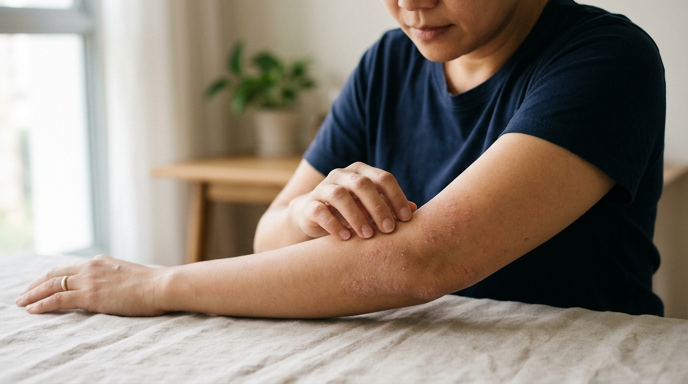
Do you wake up with the insides of your elbows scratched raw, without any memory of doing it? Or find rough, itchy patches creeping along your forearms that flare every time you sweat?
Arms are one of the most common places for eczema to settle, and one of the hardest to leave alone. They are within easy reach all day, and at night your nails find them without you noticing. By morning the skin is broken again, and the cycle starts over.
I hear this constantly from our community. People who have their flare mostly under control everywhere else, but can’t stop the itch on their inner elbows. Let’s work through why it happens and what actually helps.
What Does Eczema on the Arms Actually Look Like?
Eczema doesn’t show up the same way on every arm. Knowing which type you’re dealing with changes how you care for it.
Flexural Eczema (the Inside of Your Elbows)
This is the classic spot. The soft crease inside your elbow, called the flexure, is warm, holds sweat, and rubs against itself all day. If you had atopic eczema as a child, this is often where it lingers or comes back as an adult.
You’ll usually see dry, red or darkened patches that feel tight and intensely itchy. With repeated scratching the skin can thicken and take on a leathery texture, a change called lichenification.
Nummular (Discoid) Eczema
If you’re seeing coin-shaped patches scattered along your forearms or upper arms, that’s likely nummular eczema. The patches are round or oval, well defined, and can weep or crust when they’re active.
It often starts after the skin has been dried out or slightly injured, which is why it turns up so readily on arms exposed to aircon, sun, and friction. It’s stubborn, and it can be mistaken for a fungal infection, so it’s worth getting a proper look if you’re unsure.
Why Arm Eczema Flares in Singapore
Our climate and daily habits give arm eczema plenty to feed on:
Heat and sweat. Sweat pooling in the elbow crease is one of the most reliable ways to set off a flexural flare. The salt irritates already-sensitive skin, and the warmth makes the itch worse. In our humidity, this is a daily battle rather than a seasonal one.
Air-conditioning. Long hours in an air-conditioned office or bedroom pull moisture out of the skin. Your arms are usually bare and exposed, so they dry out faster than covered areas, which lowers the threshold for a flare.
Sun exposure. Forearms catch the most sun of any part of the body. Sunburn and UV damage dry and inflame eczema-prone skin, and they also darken any marks left behind.
Sunscreen and insect repellent. The very things we put on our arms to protect them can sting and trigger reactions. Fragrance, high-percentage DEET, and certain chemical filters are common culprits on sensitive forearm skin.
Fabric and friction. Rough seams, wool, and synthetic sleeves rubbing against the inner arm cause friction that irritates the skin barrier. Detergent residue left in sleeves adds a chemical trigger on top of the physical one.

The Night-Time Scratch Problem
Eczema on arms is so much harder to deal with than most areas because you scratch them in your sleep.
You can follow a perfect routine all day, then undo it in a few unconscious minutes at 3am. The inner arms are easy to reach even when you’re half asleep, and by the time you wake up the skin is torn open and weeping again.
This was a challenged I also faced for a long time. Covering my arms at night with a proper fabric helped me to break that cycle, especially these eczema sleeves.
Protecting the skin while you sleep isn’t a nice-to-have for arm eczema. It’s often the single change that lets everything else start working.
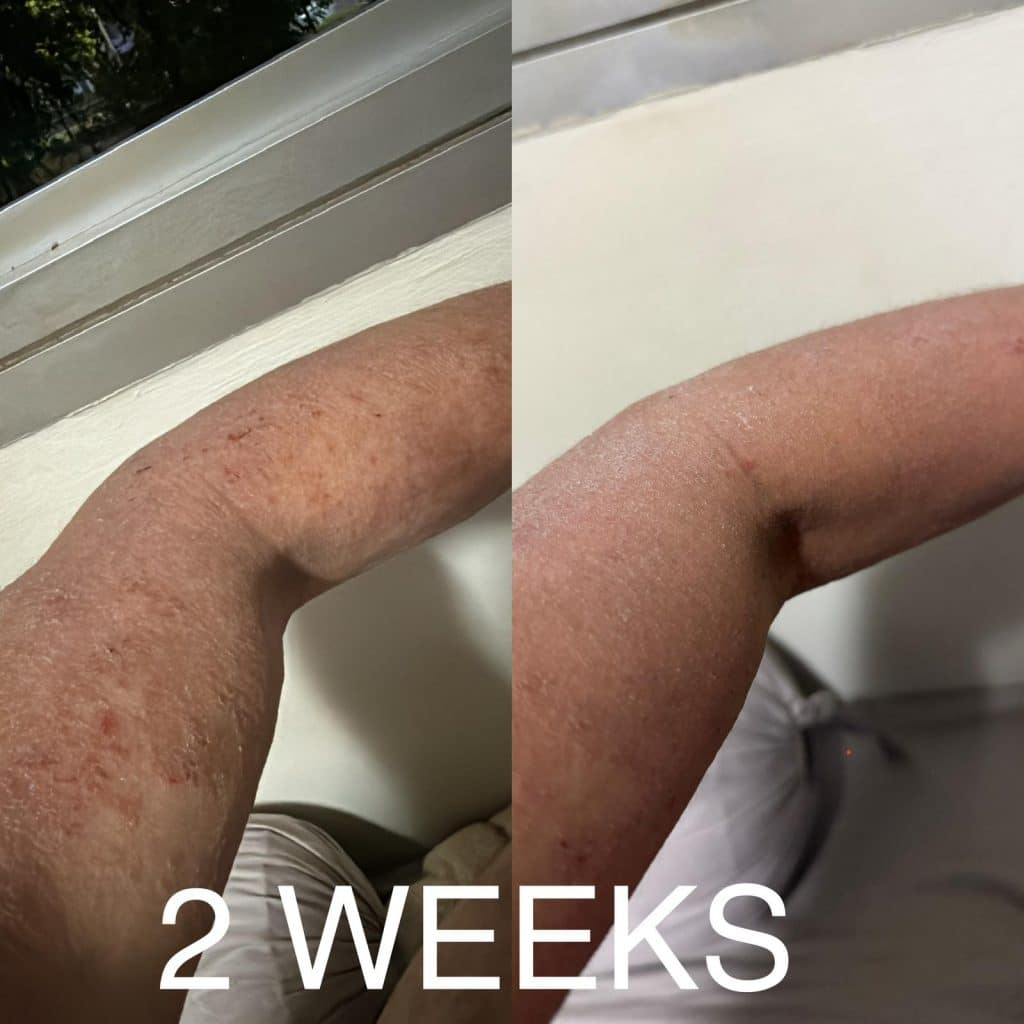
CASE STUDY:
To protect his skin barrier, Darren started wearing arm sleeves to bed. These antimicrobial silk sleeves kept his treatments in place and reduced friction against bedsheets. Full Story
How to Tell If It’s Getting Infected
Scratched-open skin is an easy entry point for bacteria. Your skin may be getting infected if you notice:
- Yellow or golden crusting over the patches
- Weeping fluid that looks cloudy or smells off
- Skin that feels hot and looks increasingly red or swollen
- A fever alongside worsening arms
- Pain that keeps building despite gentle care
Infection sets in quickly once the barrier is broken, so don’t wait it out if things look like they’re heading that way.
A Step-by-Step Care Routine for Arm Eczema
The order matters: cleanse, calm, seal, then cover. Each step sets up the next.
Step 1: Cleanse Gently, Without Stripping
Swap harsh shower gels for a mild, non-drying wash while your arms are flaring. A gentle antiseptic body wash like HOSPIGEL Body Wash cleans without the sting of standard soap, and it’s gentle enough for children too.
Use lukewarm water, not hot. Hot water feels good on an itch for a second and dries the skin out for hours afterwards. Pat dry with a soft towel rather than rubbing.
Step 2: Calm and Rebuild the Barrier
Once skin is clean and just damp, this is the moment to lock moisture in.
For arms I like Y-Not Natural 100% Pure Emu Oil. Its lipid profile is close to our own skin’s, so it absorbs rather than sitting on the surface, and it’s naturally anti-inflammatory, which helps settle the redness and itch. A few drops massaged along each arm is plenty. A little goes a long way.
If you prefer a cream texture for daytime under sleeves, the Y-Not Natural Skin Protectant Cream with Emu Oil does the same job in a less oily format.
One caveat: don’t apply oil or cream directly onto open, weeping, scratched-raw skin. Let those areas close first, and keep them clean in the meantime.
Step 3: Seal Dry, Cracked Patches at Night
For thicker, very dry patches, follow the oil with an ointment to hold everything in overnight. A Kakadu Plum & Beeswax Skin Ointment forms a protective layer that locks moisture in, or if you want something specifically sting-free with ceramides, the QV Dermcare Sting-Free Ointment is a gentle option.
Ointments are thicker than creams on purpose. That thickness is what keeps the moisture from evaporating out of dry arm skin while you sleep.
Step 4: Cover Your Arms (the Step That Breaks the Scratch Cycle)
This is the arm-specific step, and it’s the one most people skip.
Covering the arms does two things at once: it holds your moisturiser against the skin so it actually absorbs, and it puts a soft barrier between your nails and the skin overnight.

For whole-arm coverage, DermaSilk Tubular Arm Sleeves are a knitted silk sleeve you pull on. The silk is smooth against inflamed skin and breathable enough for our climate. They also double as a wet-wrap layer if your doctor has suggested that.
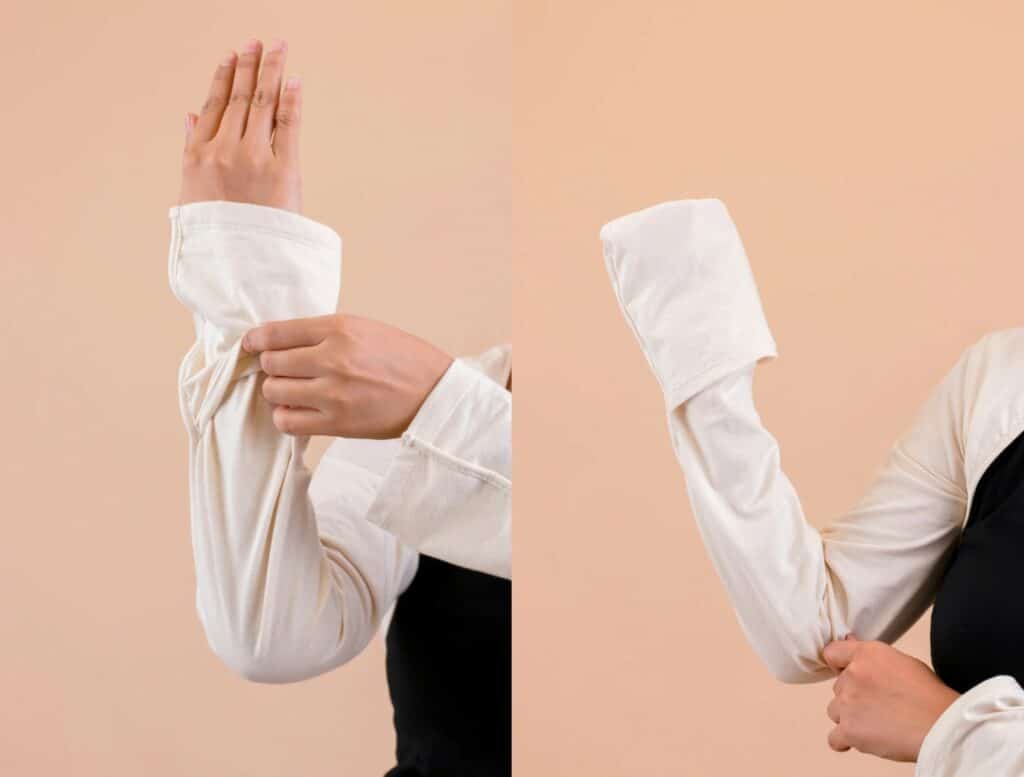
For daytime cover that still looks like clothing, the Allergy-Free Bolero Arm Sleeves with reversible mittens shield the forearms and can flip over the hands when the urge to scratch hits.
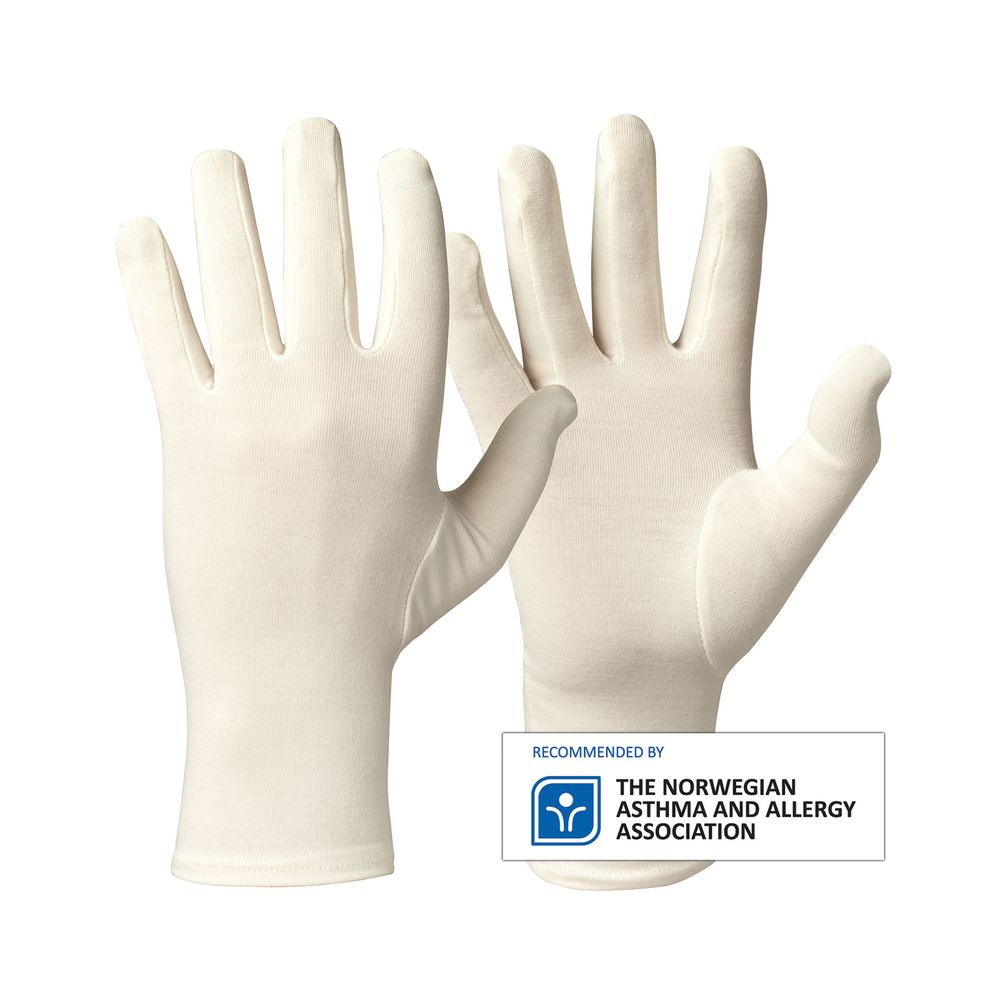
If your nails are the main problem at night, a pair of Adult Bamboo Eczema Gloves blunts the damage even when your hands wander to your arms in your sleep.
Learn more about eczema sleeves >
What About Sweat, Sport, and the Sun?
Exercise and sweat. Don’t skip working out, but rinse your arms with plain lukewarm water soon after, and reapply your emu oil once you’ve patted dry. Letting dried sweat sit on the crease of your elbow is asking for a flare.
Going outdoors. Cover flaring forearms with a light, smooth long sleeve rather than loading broken skin with sunscreen. If you do need sunscreen on clear skin, patch-test a fragrance-free mineral formula on a small area first.
Aircon at your desk. Keep a small tube of your moisturiser at work and reapply mid-afternoon. The background dryness of an air-conditioned office is easy to top up against once you’re in the habit.
You Don’t Have to Live With Raw, Itchy Arms
Arm eczema feels relentless because the one thing that would help, leaving it alone, is the hardest thing to do while you sleep. Once you take the scratching out of the equation and give the barrier a chance to rebuild, most people see meaningful improvement within two to three weeks.
Start with covering your arms tonight and cleansing gently tomorrow. Small, repeatable steps. If you’re not sure which products suit your skin, reach out and we’ll help you work it out.
