
Skincare Regimen
Hand Eczema in Singapore: Why It Happens and How to Heal Cracked, Blistered Skin
Apr
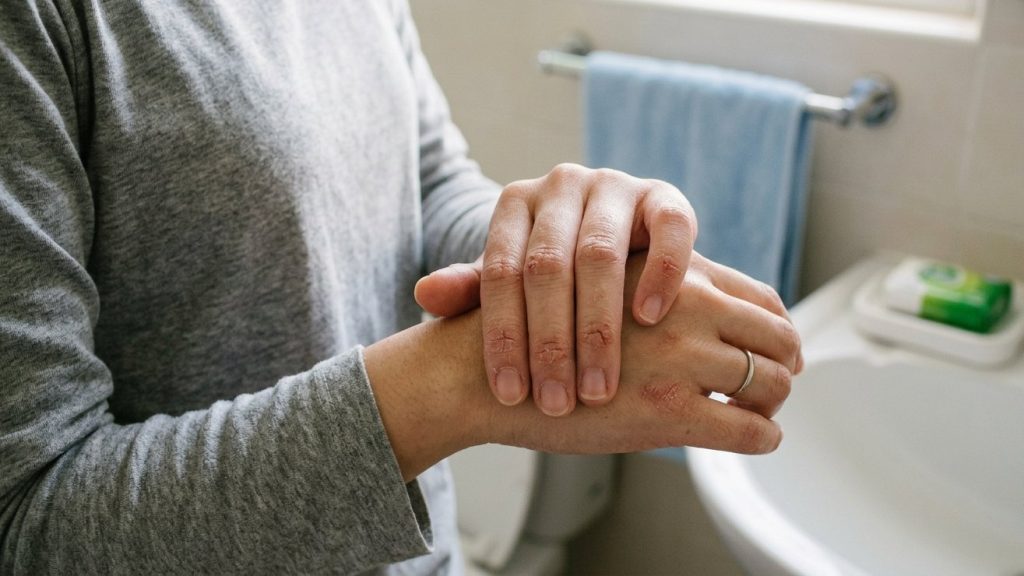
Have you ever flinched while washing your hands because of raw, cracked skin on your fingers? Or noticed tiny, stubborn blisters forming on your knuckles that just won’t go away? You’re probably dealing with a common problem that faces many people.
Hand eczema (also called hand dermatitis) affects many adults at some point in their lives, and living in Singapore can make it especially tricky to manage. Between the humidity, constant handwashing, and daily exposure to cleaning products, our hands deal with a lot.
I’ve seen hundreds of people in our community struggle with this. Mums who can’t do the dishes without their skin splitting open. Working adults who hide their hands during meetings. Kids whose blistered palms keep them up at night. And many of them have told me the same thing: they didn’t even know there were different types of hand eczema, each needing a slightly different approach.
So let’s sort through all of that.
What Does Hand Eczema Actually Look Like?
Hand eczema doesn’t always show up the same way. Your symptoms will depend on which type you’re dealing with, and you can actually have more than one type at the same time.
Contact Dermatitis
This is the most common form of hand eczema, and it happens when your skin reacts to something it’s been touching. Soaps, detergents, cleaning sprays, latex gloves; even the metal on your watch or rings can set it off.
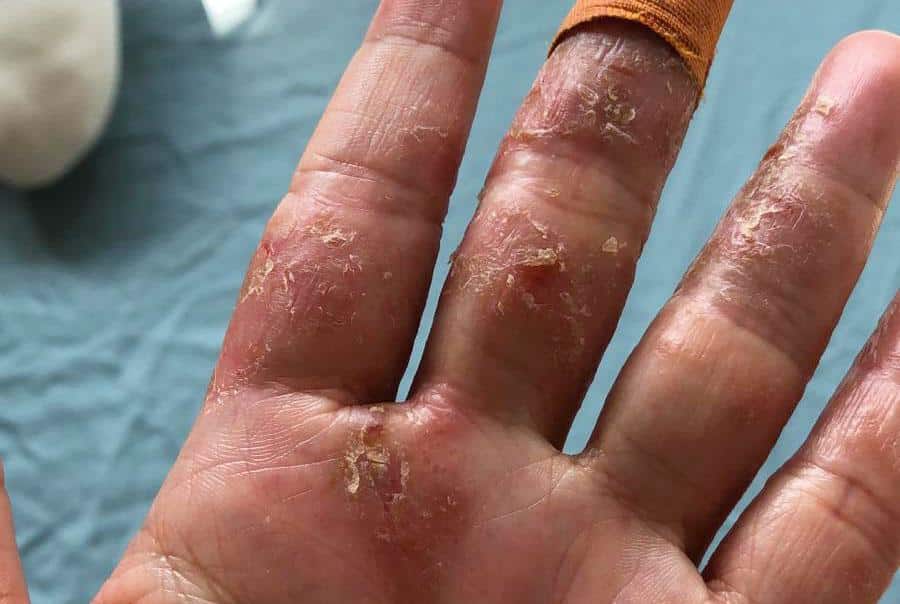
You’ll typically notice dry, red patches that feel tight and sore. Over time, the skin may start to crack and peel, especially around the fingertips and between the fingers. If it gets bad enough, the cracks can bleed.
One of our customers, Kendra, developed painful cracked hands after using hotel soap while on holiday. She’d never had skin problems before, but the unfamiliar soap triggered a reaction that lasted weeks after she got home. (You can read Kendra’s full story here.)
Dyshidrotic Eczema
If you’re getting small, intensely itchy blisters on your palms, the sides of your fingers, or your knuckles, that’s likely dyshidrotic eczema (sometimes called pompholyx). These blisters can cluster together and feel like they’re burning under the skin. When they eventually pop or dry out, the skin underneath often peels and cracks.
This type is particularly frustrating because the blisters tend to come in waves. You think you’re healing, then another round appears.
Sara, a mum from our community, reached out when her daughter’s palms were covered in blisters so bad she couldn’t play the harp. Within three weeks of following a proper care routine (no steroids), her daughter’s hands healed enough to perform again.
Atopic Dermatitis on the Hands
If you had eczema as a child, you may find it showing up on your hands as an adult. This type tends to cause widespread dryness, redness, and itching. Not just in the areas that touch irritants, but across the whole hand. Flare-ups are often triggered by stress, weather changes, or allergens rather than direct contact with a specific product.
Why Hand Eczema Is So Common in Singapore
Our environment creates the perfect conditions for hand eczema to develop and persist. Here are the main triggers I see over and over again in our community:
Frequent handwashing and sanitiser use. We all got into the habit of sanitising our hands regularly over the past few years, and many workplaces and food establishments still require it. Alcohol-based sanitisers strip the skin’s natural oils rapidly, and repeated use throughout the day breaks down the skin barrier faster than it can rebuild.
Humidity and sweat. Our climate means our hands sweat more, which softens the skin and makes it more vulnerable to irritation. If you’re wearing rubber or latex gloves for work (food handling, cleaning, healthcare), the trapped moisture makes things worse. Sweat pooling under gloves is a very common trigger for dyshidrotic flare-ups.
Household cleaning. Dishwashing liquid, floor cleaners, laundry detergent; if your hands are in and out of these chemicals daily, your skin barrier takes a beating. This is especially tough for stay-at-home parents managing a household. Many of our customers are mums who do housework around the clock and can’t avoid contact with cleaning products entirely.
Occupational exposure. Healthcare workers, F&B staff, hairdressers, cleaners, and childcare workers are all at higher risk. Anything that involves wet work (hands going in and out of water repeatedly) or chemical exposure adds up over time.
Air-conditioning. Spending long hours in an air-conditioned office dries out the skin. Your hands lose moisture throughout the day, and if you’re already prone to eczema, this background dryness lowers the threshold for a flare-up.
How to Tell If It’s Getting Infected
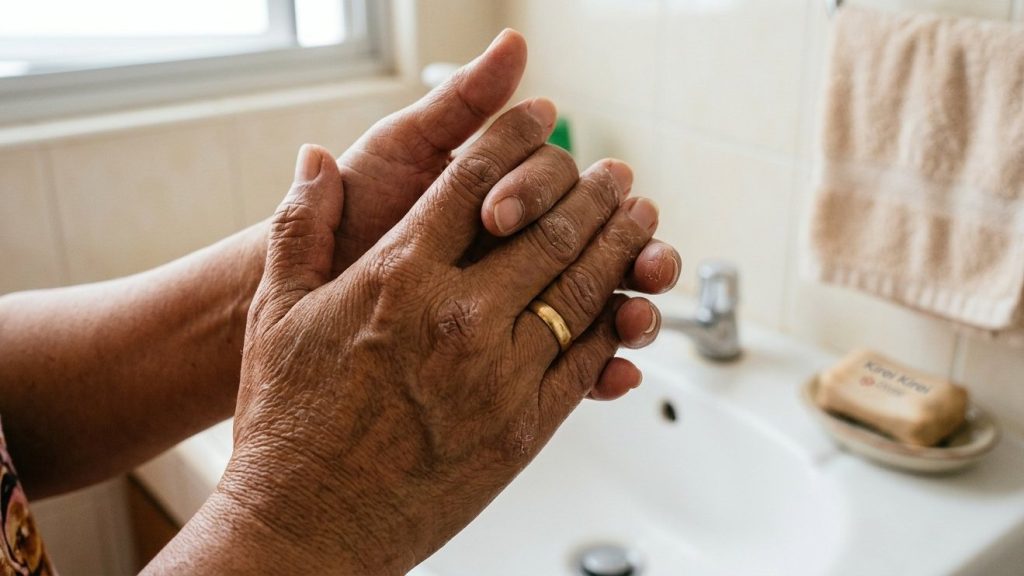
Cracked skin is an open door for bacteria. If you notice any of these signs, it’s worth seeing a doctor sooner rather than later:
- The cracks are oozing yellow or greenish fluid
- The skin around the cracks feels hot and looks increasingly red or swollen
- You’re developing a fever alongside worsening hands
- The pain is getting worse instead of better despite moisturising
Infection can set in quickly when the skin barrier is broken, so don’t wait it out if things look like they’re heading in that direction.
A Step-by-Step Care Routine for Hand Eczema
Over the years, I’ve walked many customers through a process that consistently works. The key is getting the order right: clean, protect, moisturise, shield.
Step 1: Cleanse Gently (Without Stripping)
Stop using regular hand soap if your skin is cracked or blistered. Harsh surfactants in standard soaps will sting and slow your healing.
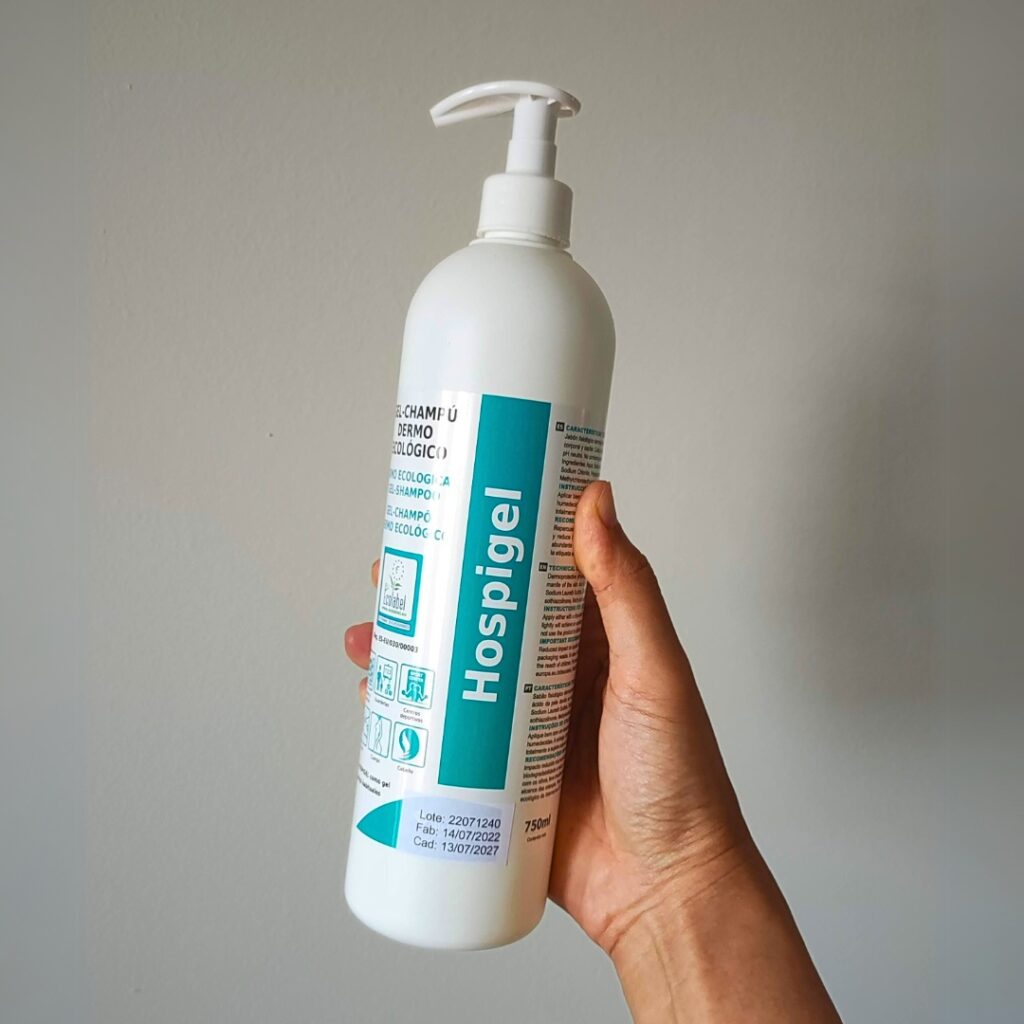
Switch to a mild, non-drying antiseptic wash like Hospigel Body Wash. It’s gentle enough for babies but still cleans effectively. You only need a small amount. The goal is to cleanse without further stripping your skin’s oils.
When washing, use lukewarm (not hot) water, and pat your hands dry with a soft towel. Don’t rub.
Step 2: Treat Open Cracks and Blisters
Here’s something that catches a lot of people off guard: you shouldn’t apply moisturiser directly onto broken, weeping skin. It will sting, and it can actually trap bacteria under the cream.
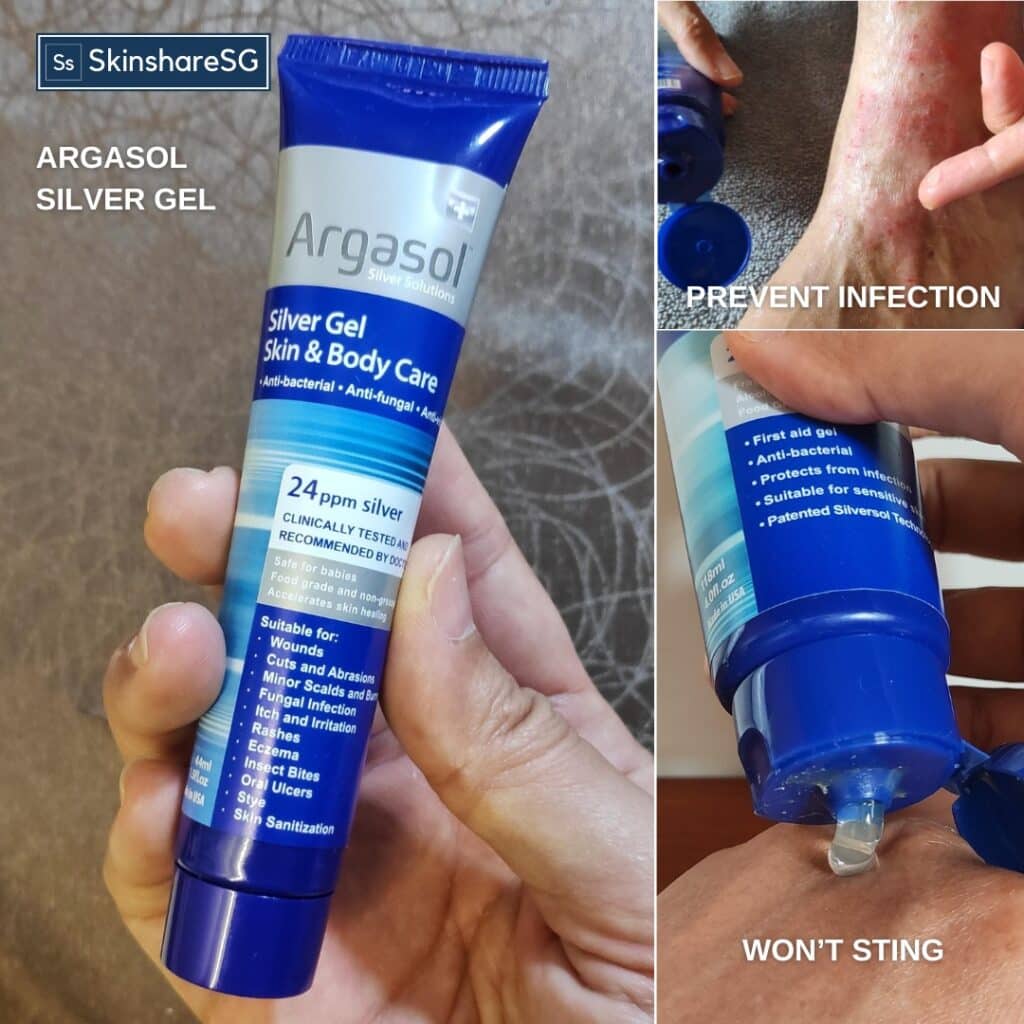
Instead, treat cracked or blistered areas like wounds first. Apply an antibacterial gel such as Argasol Silver Gel to any open areas. Silver gel is antifungal and antiviral as well, and because it uses a food-grade gelling agent, it’s non-toxic and safe for frequent use. This step keeps infection out while your skin closes up on its own.
Step 3: Moisturise Deeply
Once the open cracks have started to close (or if your skin is dry and flaky but not actively broken), it’s time to moisturise.
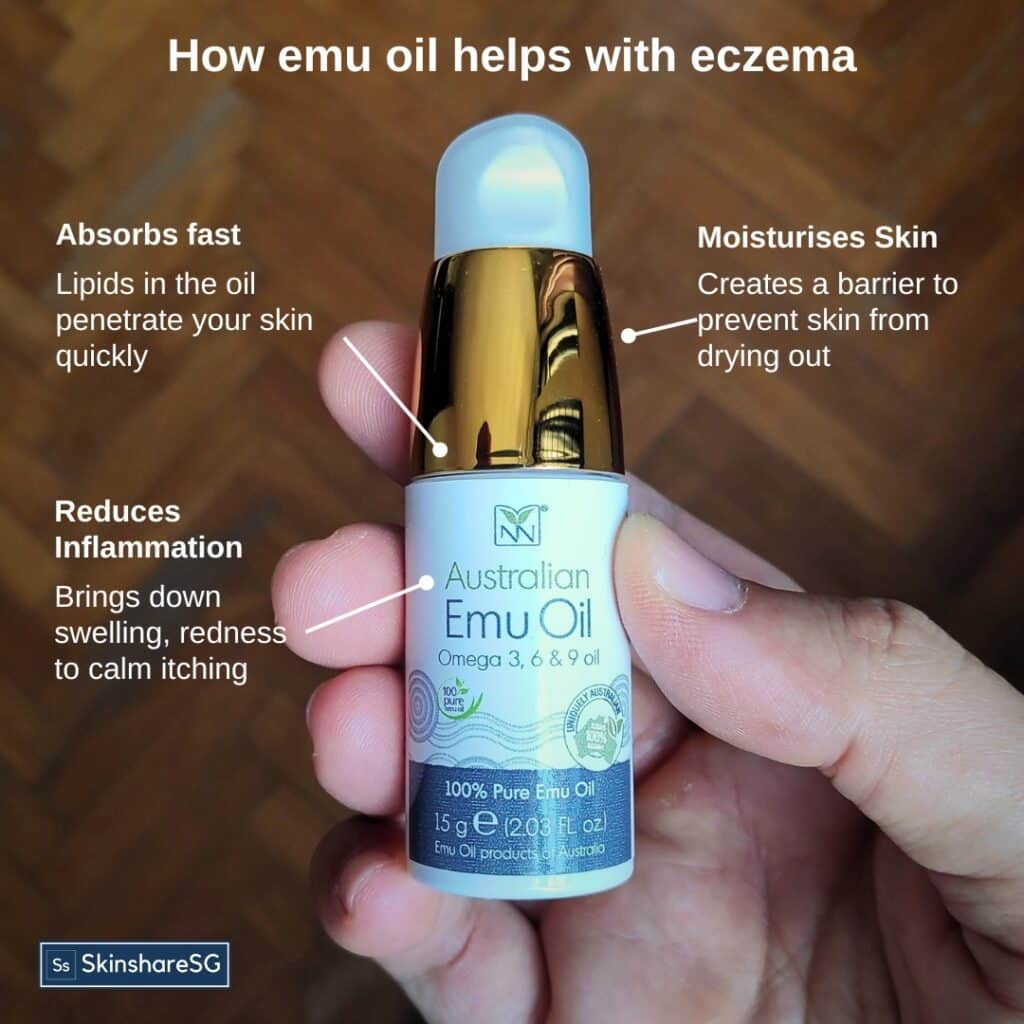
For deep hydration, I recommend Y-Not Natural Omega 369 Pure Emu Oil. Emu oil works particularly well for hand eczema because its lipids closely resemble human skin, which means it penetrates effectively rather than just sitting on the surface. It helps rebuild the skin barrier from within, and it’s anti-inflammatory, so it calms redness and irritation at the same time.
Apply a few drops and massage gently into the affected areas. You don’t need much. A little goes a long way.
For extra protection on very dry, cracked patches, follow up with a thick ointment like Kakadu Plum and Beeswax Skin Ointment. Ointments are thicker than creams and form a protective layer that locks moisture in and keeps irritants out. This is especially useful at night.
Step 4: Shield Your Skin During the Day
This is the step most people skip, and it makes a big difference.
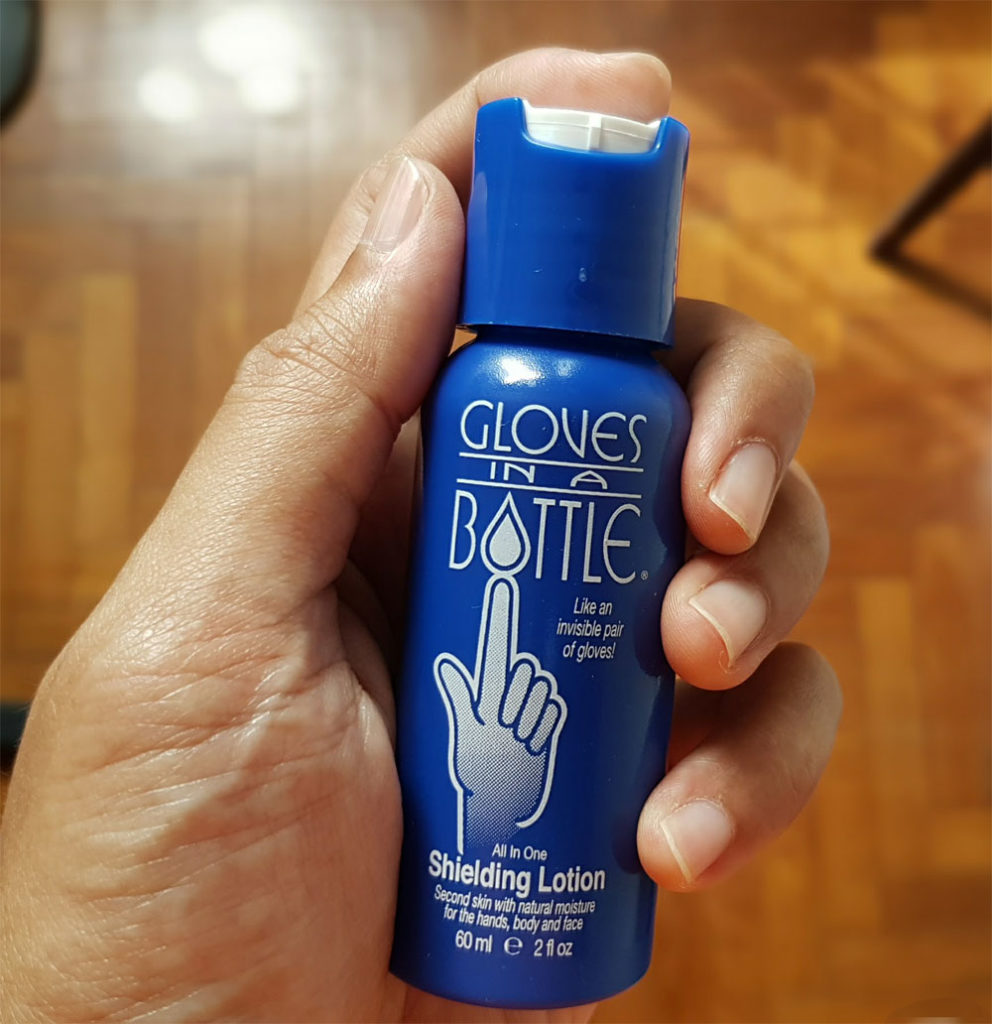
A shielding lotion like Gloves in a Bottle bonds with your outer skin cells to create an invisible barrier. Unlike regular moisturisers that sit on top and wash off quickly, it stays put for 4–6 hours, even through handwashing. It lets your skin breathe and heal while blocking out the irritants you come into contact with throughout the day.
This is especially useful if you do wet work, handle cleaning products, or work in an environment with lots of dust or chemicals. Think of it as an invisible pair of protective gloves that don’t interfere with your daily tasks.
(Read more about how Gloves in a Bottle works for hand eczema.)
Step 5: Protect Your Hands at Night
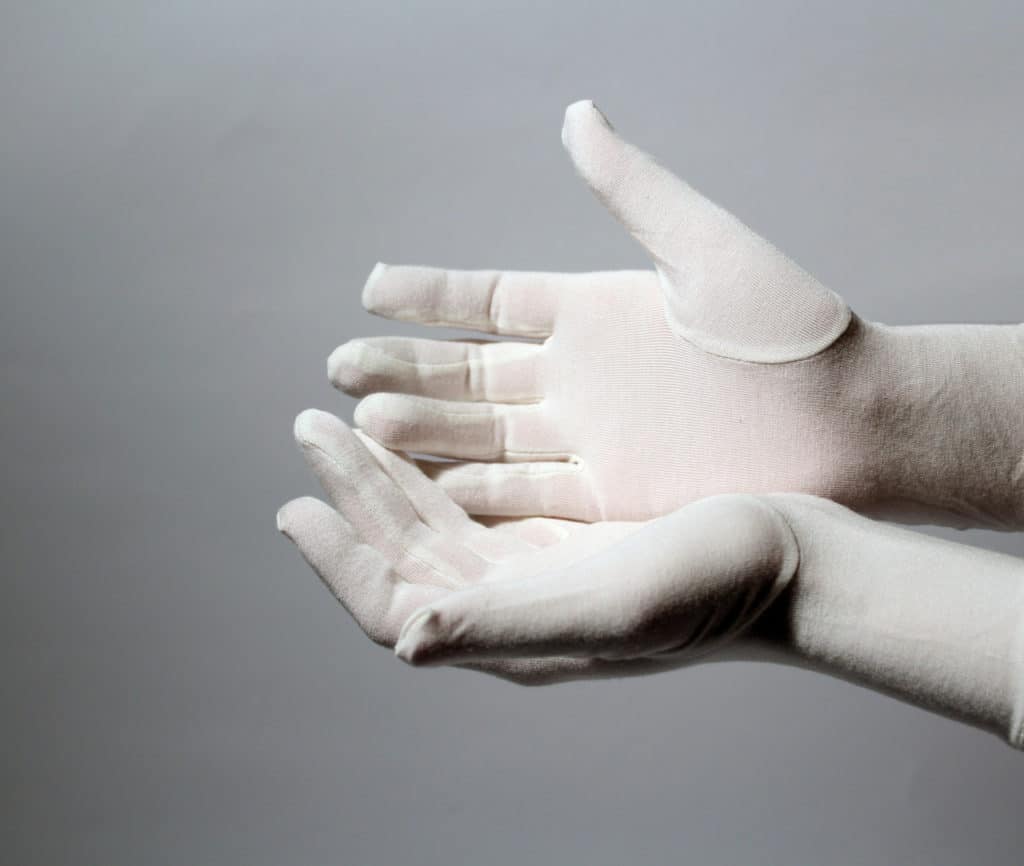
Nighttime is when your skin does its best healing. To make the most of it, apply your emu oil (and ointment if needed), then slip on a pair of bamboo eczema gloves before bed.
Bamboo gloves serve two purposes: they lock in the moisturiser so it can work overnight without rubbing off on your sheets, and they prevent you from scratching in your sleep. Unconscious scratching is one of the biggest reasons hand eczema heals so slowly, because you can undo a whole day’s progress in one night.
Bamboo is a better choice than cotton for eczema because the fibres are naturally smooth, antibacterial, and temperature-regulating. In Singapore’s climate, cotton gloves can trap heat and feel uncomfortable, but bamboo stays cool even after hours of wear. (We have children’s sizes too, for kids who scratch at night.)
Real result: Valerie, a physiotherapy student in Singapore, had hand eczema so bad she couldn’t touch her classmates during practice sessions. After just one night of applying emu oil and wearing bamboo gloves, her dry, peeling skin was visibly improved. Several weeks later, she no longer needed steroid cream at all. (Read Valerie’s story)
If you need to use your hands for work during the day but still want protection, our organic cotton fingerless gloves are made from 100% undyed organic cotton; free from latex and spandex that can trigger contact dermatitis. And they leave your fingertips free for typing, using your phone, and other tasks.
What About Housework?
This is one of the most common questions I get, particularly from parents who can’t just stop doing dishes or laundry.
For washing dishes: Wear PVC or latex-free disposable gloves over your bamboo gloves or over Gloves in a Bottle. If disposable gloves irritate you, try lining them with a thin pair of bamboo gloves first. Limit your time in water as much as possible. If you can, batch your washing instead of rinsing things throughout the day.
For cleaning: Avoid direct contact with cleaning sprays and floor detergents. Apply Gloves in a Bottle before you start. If your skin is actively cracked, wear protective gloves for any cleaning task, even if just wiping down surfaces.
For laundry: Consider switching to a fragrance-free, hypoallergenic detergent. The residue left on clothes by heavily fragranced detergent can irritate not just your hands but your whole body.
(For more on choosing the right skincare approach, read our guide on the correct skincare choices to heal hand contact dermatitis.)
When Should You See a Doctor?
Not every case of hand eczema needs medical intervention, but there are times when professional help is important:
- If the cracking, blistering, or peeling is spreading despite consistent care
- If you suspect infection (oozing, swelling, increased pain, warmth)
- If your hand eczema is severe enough to affect your ability to work or sleep
- If you’ve never been formally diagnosed, a skin prick test or patch test can help identify the specific allergens triggering your reactions, which makes avoidance much easier
Your GP can refer you to a dermatologist at the National Skin Centre or a private clinic for further assessment. If you’re interested in exploring whether your diet might be contributing to your flare-ups, you may also want to consider a nutrition consultation as the gut-skin connection plays a bigger role in eczema than many people realise.
Products Mentioned in This Guide
Here’s a quick summary of everything referenced above, in the order you’d use them:
- Cleanse: Hospigel Body Wash — mild antiseptic wash, safe for babies
- Treat wounds: Argasol Silver Gel — antibacterial, antifungal, non-toxic
- Moisturise: Y-Not Natural Pure Emu Oil — deep penetration, anti-inflammatory
- Seal: Kakadu Plum and Beeswax Ointment — thick protective barrier for very dry patches
- Shield (day): Gloves in a Bottle — invisible barrier, lasts 4–6 hours
- Protect (night): Bamboo Eczema Gloves — locks in moisture, prevents scratching
- Protect (day): Organic Cotton Fingerless Gloves — protection with dexterity
You Don’t Have to Live with Painful Hands
Hand eczema can feel relentless, especially when every daily task (washing up, cooking, bathing your kids) feels like it’s working against your skin. But with the right routine and the right products, most people see meaningful improvement within two to three weeks.
Start with the basics: gentle cleansing, treating any wounds, and consistent moisturising. Add a shielding lotion for daytime and gloves for night. Be patient with the process, and try to identify your personal triggers so you can reduce your exposure to them over time.
If you’ve been dealing with cracked, blistered hands and you’re not sure where to start, feel free to reach out to us. We’ve helped hundreds of people in Singapore find a routine that works for their hands, and we’d be happy to help you too.
Related reading:
- What Causes Hand Blisters?
- How to Prevent Contact Dermatitis on Hands from Recurring
- Different Types of Eczema and How They Look
- How Emu Oil Helps Eczema
- These Bamboo Eczema Gloves Will Stop You From Scratching at Night
